Galaxy Roket'le
Geleceğe Roketle!



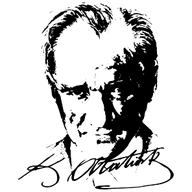

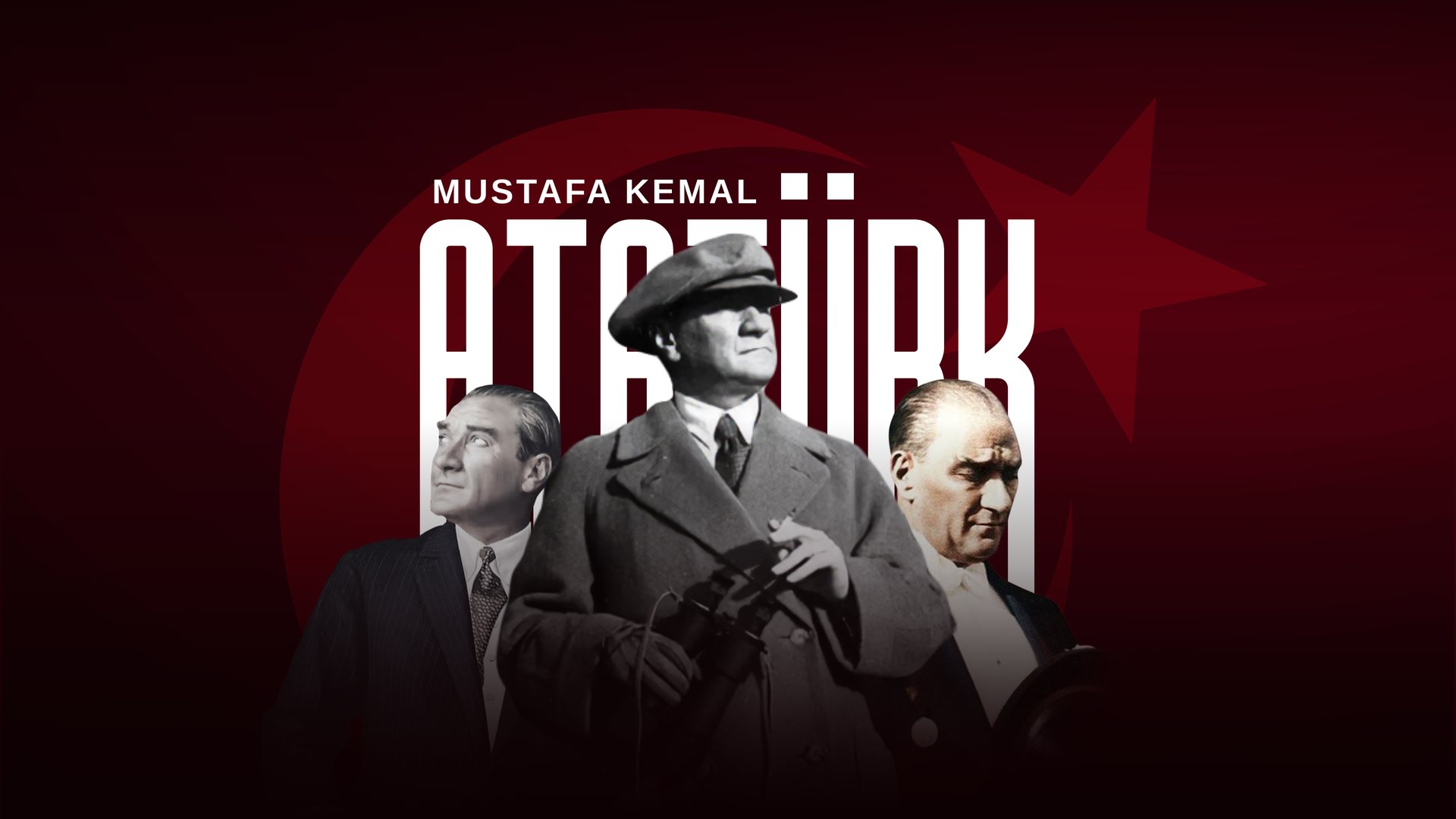
Leader of a Nation: Mustafa Kemal Atatürk
ContinueThe future is in the skies.
Our rockets leave a trail across the sky, and a star lights up wherever the trail passes. When three thousand stars are in place, they form the portrait of the leader who showed us this path.
Mustafa Kemal Atatürk
"The future is in the skies."Mustafa Kemal Atatürk
At Galaxy Roket, every launch draws strength from Atatürk's faith in science and youth. His words "The future is in the skies" are the compass of our rocket and space work.
"The Future Is in the Skies!"
Mustafa Kemal Atatürk was born in 1881 in Thessaloniki. He was educated in military schools and graduated from the War Academy in 1905. His extraordinary leadership at Gallipoli earned him the title "Hero of Anafartalar".
Landing in Samsun on May 19, 1919, he launched the War of Independence. He founded the Grand National Assembly on April 23, 1920, and liberated the homeland through the Battle of Sakarya and the Great Offensive.
He proclaimed the Republic on October 29, 1923 and became its first President, carrying out fundamental reforms. When he passed away on November 10, 1938, he left behind an independent, modern and respected nation.
Atatürk Special Video
LEGACY
Science, Education & Modernisation
The steps taken in the early years of the Republic laid the groundwork for the work we carry on today in labs and workshops.
Unification of Education
All schools were brought under a single roof with a shared, science-based curriculum.
01Alphabet Reform
A new Turkish alphabet based on Latin letters was adopted, and the Nation Schools launched a nationwide literacy campaign.
02Law on Measures
The international metric system based on the metre and kilogram was adopted, giving science and industry a common language.
03University Reform
The Darülfünun was transformed into the modern Istanbul University, placing the natural sciences at the heart of higher education.
04Women’s Suffrage
Turkish women won the right to vote and stand for parliament, earlier than in many European countries.
05MTA Institute
The Mineral Research and Exploration Institute was founded to survey natural resources with scientific methods.
06SCIENCE AND ENGINEERING
Five Fronts of Reason and Science
For Atatürk, independence was not won on the battlefield alone; it was also built in laboratories, factories, hangars and classrooms. Pick a field to see the steps taken in it.
“The truest guide in life is science.”
Spoken to teachers in Samsun on 22 September 1924, these words sum up the Republic’s approach to education and research.
- 1924The Law on the Unification of Education brought all schools under one roof.
- 1929Under Law No. 1416, hundreds of students were sent abroad to study and return to serve the country.
- 1931The Society for the Study of Turkish History, forerunner of the Turkish Historical Society, was founded.
- 1932The Society for the Study of the Turkish Language, forerunner of the Turkish Language Association, was founded.
- 1933The University Reform was carried out; the Higher Institute of Agriculture opened in Ankara.
Transport, communication and energy
The young Republic treated technology as infrastructure that had to reach every corner of the country.
- 1923–1938About 3,000 kilometres of new railway were laid, and much of the existing network was nationalised.
- 1927Regular radio broadcasts began in İstanbul and Ankara.
- 1931The Law on Measures adopted the international system based on the metre and the kilogram.
- 1935The Electrical Power Resources Survey Administration was founded to study energy resources systematically.
- 1936Çubuk Dam, supplying water to Ankara, entered service.
Planned industrialisation
Factories were designed not only to produce, but also as schools that trained engineers and craftsmen.
- 1923The İzmir Economic Congress set the goal of economic independence.
- 1927The Law for the Encouragement of Industry supported domestic production.
- 1933Sümerbank was founded.
- 1934The First Five-Year Industrial Plan came into force.
- 1935The Mineral Research and Exploration Institute and Etibank were founded.
- 1937The foundation of the Karabük Iron and Steel Works was laid.
“The future is in the skies.”
Aviation was seen both as a matter of defence and as a new horizon opened to the young.
- 1925The Turkish Aeroplane Society (today’s Turkish Aeronautical Association) was founded.
- 1926The Kayseri Aircraft Factory began production.
- 1930Vecihi Hürkuş flew the Vecihi XIV, an aircraft of his own design.
- 1933The State Airlines were founded.
- 1935Türkkuşu opened; young people began glider and parachute training.
- 1937Sabiha Gökçen flew operational missions as one of the world’s first female combat pilots.
Defence with the nation’s own means
The War of Independence had shown the cost of depending on others for defence.
- 1921The General Directorate of Military Factories was founded.
- 1925Şakir Zümre founded one of the first private defence factories on the Golden Horn.
- 1920sFactories producing ammunition and steel began to be built in Kırıkkale.
- 1926Aircraft production began in Kayseri, backing air power with domestic manufacturing.
- 1936Nuri Demirağ began work on an aircraft factory and the Sky School in İstanbul.
GEOMETRY, 1937
A Head of State’s Geometry Book
In the winter of 1936–1937, Atatürk wrote a geometry book at Dolmabahçe Palace. Published in 1937, it proposed Turkish replacements for terms of Arabic and Persian origin. The words every Turkish student uses today for triangle, angle, diameter, radius and tangent come from that book.
The language we use today to work out a nose cone or a fin angle took shape at his desk that winter.
müsellesüçgentrianglezaviyeaçıanglekuturçapdiameternısf-ı kuturyarıçapradiusmümasteğettangentmustatildikdörtgenrectanglemurabbakaresquaremuvaziparalelparallelkaidetabanbaseufkîyatayhorizontalşakulîdüşeyverticalmüsavieşitequal
IN PHOTOGRAPHS
Moments of Atatürk
Photographs from the founding years of the Republic. Tap a photo to enlarge it.
Portrait of Mustafa Kemal AtatürkAround 1919 After the Second Battle of İnönü1921
 With the people of Adana1922–1923
 Visit to İzmir Girls' High School1 February 1931
 The future is in the skiesGalaxy Roket
 Alphabet reform: introducing the new letters1928
 The alphabet reform1928
 With King Amanullah Khan of Afghanistan1928
 Portrait in military uniform1930
 Listening to a citizen in Tokat1930
 Drinking Turkish coffee1930
 With his adopted daughter Ülkü1930s
 Portrait1930s
 With his generals
Historical photographs: Wikimedia Commons (public domain).
The Future in the Skies
Atatürk saw aviation and the defence industry as a national cause. From founding aircraft factories to giving young people flight training, every step was part of a vision that looked to the skies for Turkey’s future.
As the Galaxy Roket Team, we carry this vision forward with today’s technology: as we design our rockets, avionics and micro-satellite, we take “The future is in the skies” as our roadmap.
Why an Atatürk Corner?
This page was created to remember the value Atatürk placed on science, education and aviation, and to keep his principles and reforms alive for every member of our team and every visitor.
Vecihi K-VI
Vecihi K-VI, the first Turkish aircraft designed and built by Vecihi Hürkuş, flew in İzmir on 28 January 1925.
Turkish Aeronautical Society
Founded on 16 February 1925, the society became the foundation of today’s Turkish Aeronautical Association.
Kayseri Aircraft Factory
Opened in Kayseri, the factory was one of the first major steps in aircraft production and maintenance in Turkey.
Türkkuşu
Established within the Turkish Aeronautical Association, Türkkuşu trained young aviators in gliding and flying.
Nuri Demirağ Aircraft Factory
In the factory he founded in İstanbul, Nuri Demirağ built the domestically designed Nu.D.36 trainer aircraft.
Sabiha Gökçen
Atatürk’s adopted daughter Sabiha Gökçen became Turkey’s first female military pilot.
Mechanical and Chemical Industry Corporation
The military factories founded in the early years of the Republic were brought together under MKE.
TUSAŞ
Turkish Aerospace Industries was founded as the umbrella organisation of the Turkish aviation industry.
ASELSAN
Founded to meet the military electronics needs of the Turkish Armed Forces from domestic sources.
Defence Industry Agency
The body that plans and supports the defence industry was founded; today it continues as the Presidency of Defence Industries.
ROKETSAN
Founded to design and produce rocket and missile systems in Turkey.
Turkish Space Agency
Founded to bring space and aeronautics work together under a national programme.
HÜRJET
HÜRJET, the domestic jet trainer and light attack aircraft, made its first flight.
First Turkish Astronaut
Alper Gezeravcı became the first Turkish astronaut to travel to the International Space Station.
KAAN
KAAN, the national combat aircraft, made its first flight.
SIX ARROWS
Atatürk’s Principles
Republicanism
A form of government based on national sovereignty, where the people govern themselves. Sovereignty belongs unconditionally to the nation.
Nationalism
Centres on the unity and independence of the Turkish nation and its rise to the level of contemporary civilisation.
Populism
Serves the good of the people and equality before the law, granting no privilege to any person, family or class.
Secularism
The separation of religious and state affairs, with reason and science guiding public life.
Statism
The state takes the lead in economic development in areas where private enterprise falls short.
Reformism
Aims to protect the reforms made and to keep society continuously modernising.
Moments from His Life
From Thessaloniki to Dolmabahçe: the rebirth of a nation within one lifetime. Tap a year or press play.
- 01 / 131881Birth
Born in Thessaloniki.
- 02 / 13190524 years old
Graduated from the War Academy as a Staff Captain.
- 03 / 13191534 years old
Halted the enemy landings at Gallipoli and became known as the “Hero of Anafartalar”.
- 04 / 1319 May 191938 years old
Landed in Samsun to start the National Struggle.
- 05 / 1323 April 192039 years old
Opened the Grand National Assembly in Ankara, declaring national sovereignty.
- 06 / 1313 September 192140 years old
The Battle of Sakarya ended in victory; the Assembly gave him the rank of Marshal and the title of Gazi.
- 07 / 1330 August 192241 years old
Led the Great Offensive, bringing the War of Independence to a victorious end.
- 08 / 1324 July 192342 years old
The Treaty of Lausanne secured international recognition of the new Turkish state.
- 09 / 1329 October 192342 years old
Proclaimed the Republic and was elected its first President.
- 10 / 133 March 192443 years old
The caliphate was abolished and education was unified under a single system.
- 11 / 131 November 192847 years old
The new Turkish alphabet was adopted.
- 12 / 1324 November 193453 years old
The Grand National Assembly gave him the surname “Atatürk”.
- 13 / 1310 November 193857 years old
Passed away at 09:05 at Dolmabahçe Palace.
Atatürk’s Address to the Youth
O Turkish Youth! Your first duty is to preserve and defend Turkish independence and the Turkish Republic forever.
This is the only foundation of your existence and your future. This foundation is your most precious treasure. In the future, too, there may be ill-wishers at home and abroad who will want to deprive you of this treasure. If one day you are forced to defend your independence and your Republic, you will not stop to weigh the possibilities and conditions of the situation before taking up your duty. These possibilities and conditions may prove extremely unfavourable. The enemies plotting against your independence and your Republic may stand for a victory unprecedented in the world. By force and by trickery, every fortress of your beloved homeland may be seized, all its shipyards entered, all its armies scattered and every corner of the country actually occupied. Graver and more painful than all these conditions, those who hold power within the country may be in negligence, error and even treason. They may even unite their personal interests with the political ambitions of the invaders. The nation may have fallen into poverty and utter exhaustion.
O child of Turkey’s future! Even under these circumstances and conditions, your duty is to save Turkish independence and the Republic.
The strength you need is already present in the noble blood in your veins!
Mustafa Kemal Atatürk · 20 October 1927Address to the Turkish Youth